Matthew Ferrie had photographs of a medieval angel roof, lit up for a carol service, sitting on his phone, and a website that showed none of it.
He is an electrician in Stoke Ferry, in west Norfolk: homes, building sites and farm workshops, the ordinary run of the trade. Yet he is also called into six-hundred-year-old churches to install lighting without leaving a mark on anything, which is a genuinely unusual thing to be good at, and his old website had been quietly sitting on it for years.
So the interesting part of this commission was not inventing a story, but finding the one he already had.
| Client | Ferrie Electrical Services Ltd |
|---|---|
| What he does | An NICEIC approved electrical contractor, family run since 2006, and a specialist in lighting churches and historic buildings |
| Platform | Standalone PHP, with no WordPress and no database |
| What I did | Strategy, content, design, the build, the photography edit, search and analytics, and the move to the live domain |
| The website | ferrieelectricalservices.co.uk (opens in a new tab) |

The evidence was all there, just nowhere useful.
Matthew photographs his work constantly, as a good many fine tradespeople do, and then it goes into WhatsApp or onto Facebook and effectively disappears. By the time we started, he had five years of it: a manor house where six ageing distribution boards had been consolidated into one modern board with a surge protector; rodent-chewed cable found behind a fuse board; and a country kitchen documented all the way through, from the old units coming out, to bare walls and the original brick floor, to the finished room with the AGA back in.
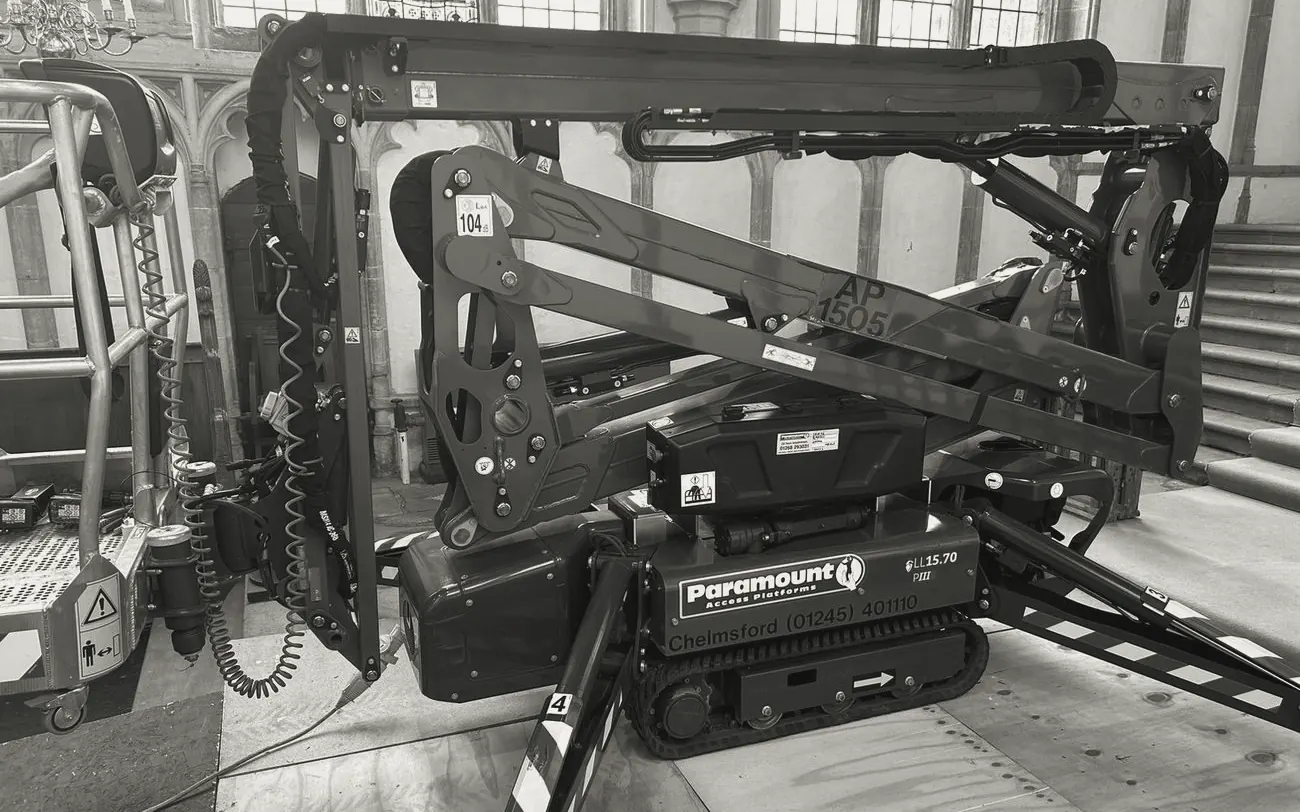
He also had, and this is the part I kept returning to, a mechanical access lift standing in the nave of a Grade I listed church so that he could reach the chancel. That is not a photograph anyone can buy, and no stock library has it.
Then there were the reviews: forty-eight of them on Google, every one of them five stars, and the old website barely acknowledged that they existed.
So the first real stretch of work was the archaeology: going through all of it, working out what each photograph actually showed, and checking every caption against its image, which matters more than it sounds. There are two churches on his patch called St Peter's, one at Upwell with the carved angels and one at Walpole St Peter with the lift, and confusing the two in public would have been exactly the kind of error that makes a specialist look as though he was not paying attention.
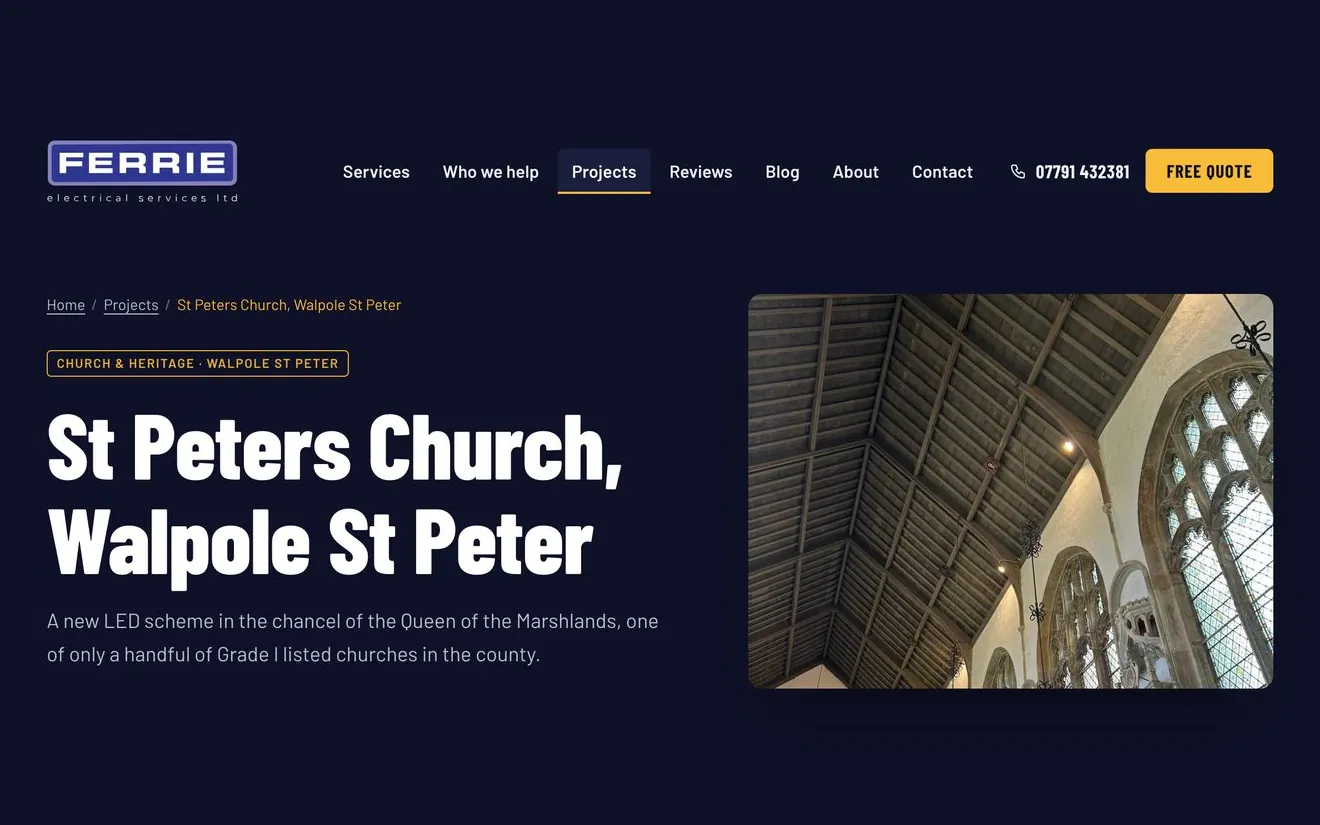
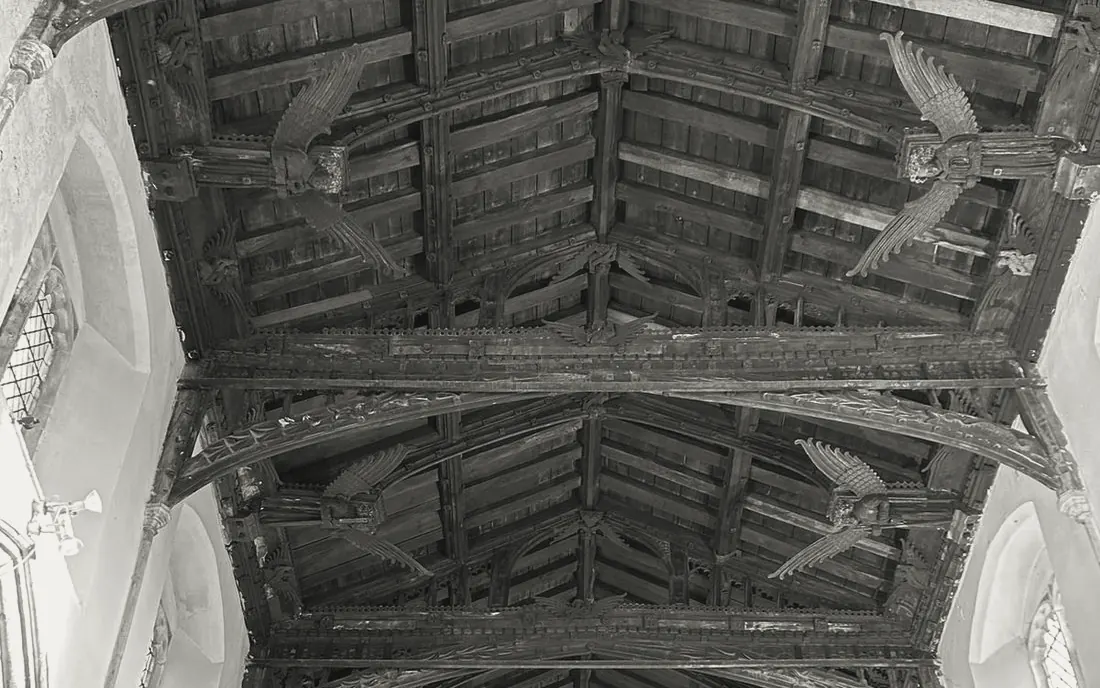
What came out of it was eleven written-up projects with real photographs (opens in a new tab), among them the angel roof at Upwell (opens in a new tab) and the lighting scheme at Walpole St Peter (opens in a new tab).
Matthew put it this way:
“I would just like to say how pleased Vanessa and I are with the work you have put in on the site and the finished result. It all reads and looks as we had hoped pulling together 5 years of taking pictures and video content on site.”
Why it is not WordPress.
I build a great deal on WordPress, and I would have used it here had it earned its place, but on this occasion it did not.
This is one electrician with a van and a phone. What he needs is a website that is still working perfectly in three years' time without anybody logging in to update nineteen plugins, and that loads at once on a phone with one bar of signal in a Norfolk village. What he does not need is a general-purpose publishing system with a database beneath it, most of which he would never touch, and all of which would be his to keep patched.
So it is plain PHP with flat files. Each blog post and each project is a folder holding a small text file and its photographs. There is no database to back up, corrupt or break into, and the only thing behind a password is the part where he adds work.
The honest trade-off is that anything beyond a new post or a new project needs a developer rather than a plugin, and I would rather say so plainly than pretend there is none. For a business of this size, where the alternative is a maintenance burden he would never keep on top of, I think it is the right way round.
The churches are what nobody else has.
Every electrician's website says the same words: reliable, qualified, free quote. Matthew can say all of that truthfully, but so can everyone he competes with in King's Lynn, so it wins him nothing.
The churches are different. Lighting a listed building without damaging its fabric, working to a faculty, dealing with churchwardens, architects and a parochial church council that has been discussing it for two years, and fitting LED schemes that cut a parish's carbon and its bills: there are not many contractors in East Anglia who can do that, and fewer still who can show you photographs of having done it.
So the churches have a section of their own (opens in a new tab) rather than a line on a list of services. That is the part of the site that can reach well beyond his van's range, because a churchwarden in Suffolk searching for someone who has done this before is making an entirely different search from someone in Downham Market who wants a socket moved.
Honest about what he cannot promise.
Partway through, Matthew questioned some of my copy, and he was right to do so.
I had drafted the reassurances a trade's website usually carries. He pointed out that he cannot promise a fixed price in writing before he has opened anything up, because in a house built in 1840 you genuinely do not know what is behind the plaster until it is off. Nor did he want to promise to answer every enquiry within a working day, because some days he is up a ladder in a church with no signal.
Both points were entirely fair. A promise that one business can keep may be one that another cannot, and a website should make only the promises its owner can keep.
So we took all of it out and wrote what is actually true instead, which turned out to be more persuasive in any case. The homepage now says:
“You see the quote before anyone lifts a floorboard. If the floorboards reveal a surprise, you hear about it before it costs you anything.”
That is a promise he can keep on every job, and it speaks directly to what people are afraid of, which is not the price but the price changing without warning. Anybody who has had the builders in knows which of those two sentences they would rather read.
It has to work from the van.
A website full of real work only stays that way if the person doing the work can add to it, and every editing system I have ever handed to a busy tradesperson has eventually gone quiet.
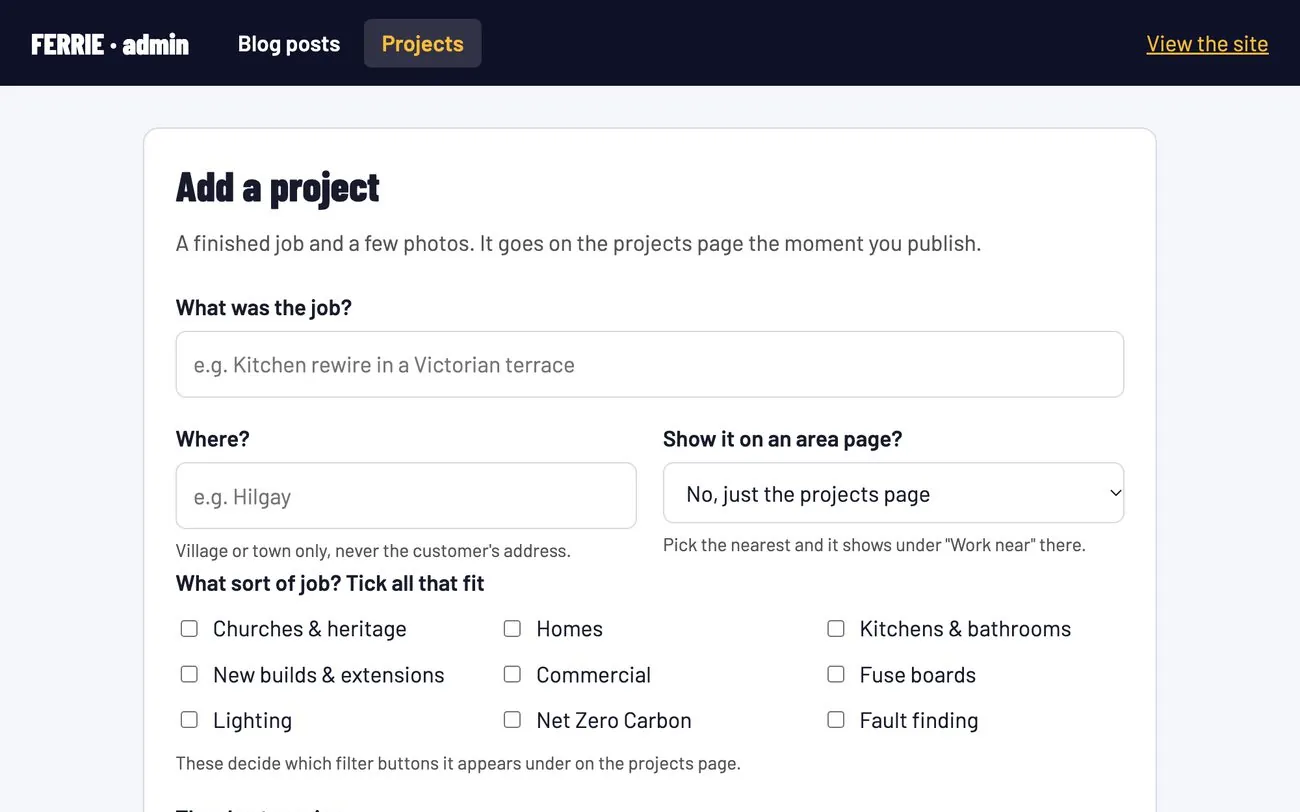
So the admin does two things and nothing else: write a post, or add a project. Photographs go straight up from his phone, are resized automatically and have their location data removed, because a customer's address should not be sitting in the EXIF data of a photograph of their fuse board.
Video was the awkward part, because he films jobs constantly and his hosting has no means of processing video at all. So his browser does the work before anything uploads: it plays the clip to check that it will actually play for other people, which catches the iPhone setting that records in a format many Windows computers cannot open, and it lets him drag a slider to choose the frame people see before they press play. If that frame comes out nearly black, as phone clips often do because they open on a dark shot, it quietly moves further in and finds a better one.
None of that is visible; it is simply the difference between him posting a clip from a job and giving up halfway through.
What I would take from this.
Most businesses I sit down with are sure they have nothing to show, yet they nearly always do. It is in a phone, or a WhatsApp thread, or a Facebook page nobody has looked at since 2019, and the reason it is not on their website is that getting it out is tedious and nobody has ever offered to do it for them.
It is well worth doing, because anyone can write “quality workmanship”, whereas almost nobody can show you a photograph of the inside of a Grade I listed church with their equipment in it.
Where it stands.
The site has fifty pages, live on his own domain: the projects, the reviews (opens in a new tab) sorted by the kind of work they describe, the services (opens in a new tab), and the patch he covers (opens in a new tab), from the Fens up to the north Norfolk coast. Every enquiry email tells him which page it came from and roughly how that person found the site, so he can see which parts are bringing in work rather than guessing.
If your business has more evidence than your website is showing, I would be glad to hear about it, since it is usually the quickest gain there is.